

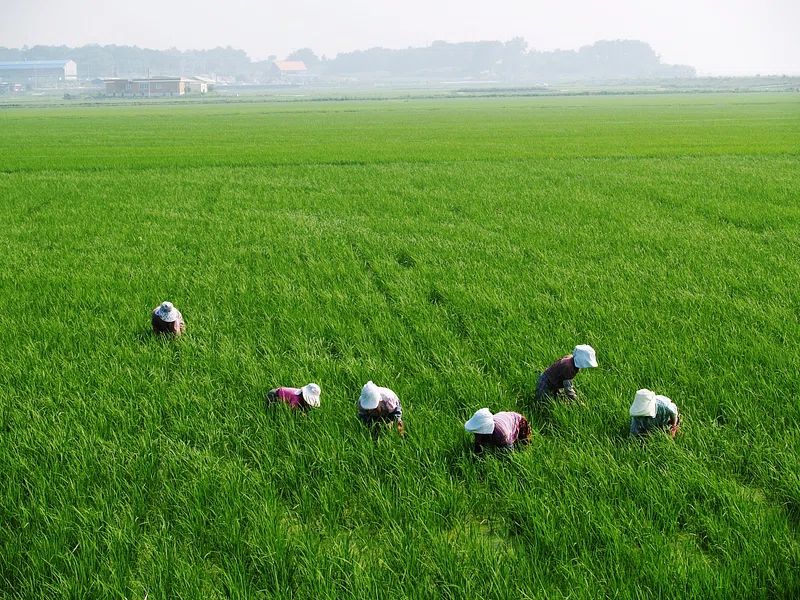
The Indian agricultural market is characterised by a fragmented land ownership structure, often with limited market access and reliance on outdated and unreliable forms of technology. Despite some of these challenges, the sector is growing at an incredibly rapid rate, increasing from an output of $340 billion in 2015 to $521 billion by 2024, accounting for 16% of GDP and 50% of the workforce. Government initiatives have worked to promote sustainable agricultural practices, such as through the former National Mission on Agricultural Extension and Technology (NMAET), which worked to increase capacity and technology dissemination through farmer-producer organizations, or the Pradhan Mantri Krishi Sinchayee Yojana (PMKSY), which recently received a funding boost from the Modi administration to support 50 food irradiation units and food testing labs.
Nonetheless, private ventures far outweigh public investment into agriculture, and there remains an array of complexities for increasing growth. In fact, yields, which were a record 353.9 million metric tons of grain last crop year, are growing significantly and have positive forecasts; however, they still lag behind China, which has subsidized its industry and advanced agricultural mechanization, or the US, which benefits from large farm sizes that can prioritize efficiency and productivity.
One consistent issue in India has been that small farm sizes are less productive and yield lower incomes to farmers. Additionally, fewer government subsidies have contributed to less support for farming communities, when compared to other major agricultural producers like China. India, in fact, has been reducing its chemical fertiliser subsidies, with significant reductions of 22% in 2023.
However, the increasing presence of private investment has opened the door to creative pathways for agricultural development. Fertiliser technology, for example, has improved significantly, with organic and bio-fertilisers offering healthier and more sustainable options for India’s small farms. This is a mission that Harvard and London Business School educated entrepreneur, Amit Gupta has been dedicated to through both his company Agrifields DMCC and the Agrifields Foundation. Despite China’s frequent trade restrictions on fertilisers imported into India, India remains the second-largest consumer of fertilisers in the world. Areas of organic farming have also increased rapidly from 1.1 million hectares in 2015 to over 4 million in 2023. Likewise, India’s smart and digital agricultural market is expected to grow at a CAGR of 20.5% from 2025 to 2033. This is driven by demand for precision agricultural techniques and the need for real-time farm data.
Several corporate initiatives have been instrumental in driving much of this growth. Tata Chemicals has created a farmer education program, offering training on the use of new technologies. Similarly, Bayer offers regenerative farming solutions that help provide real-time data on farming conditions, allowing farmers to make faster and more efficient decisions. Other companies like Mahindra and Mahindra have set up services to facilitate the adoption of new technologies and connect suppliers with buyers.
Precision farming is one of the core technological aims of these initiatives, as it can easily address the problem of smaller farm sizes and can increase yields by up to 30%. Indeed, precision farming is a multifaceted aspect of agritech, involving real-time monitoring, predictive modelling, often driven by AI, automation, and satellite-based technology like soil-moisture analysis, stress detection, and crop health assessment. The widespread adoption of precision farming will play a role in making small farms more sustainable while increasing yields and eventually translating into higher and more reliable incomes for farming communities.
Technological improvements have been paired with simultaneous efforts to revitalize Indian agricultural communities from the roots up. Amit Gupta of Agrifields, for example, has been one voice advocating for holistic and localized approaches to rural development. He believes that a stronger Indian agricultural sector requires healthier farming communities; that villages and towns need support beyond technological advances. Creating sustainability in agriculture means empowering farmers and their communities.
Amit Gupta has been a leader in organizing pilot projects in schools for rural communities, health screenings, and implementing technological reforms through collaboration with firms like CultivaTec. “True agricultural progress,” Amit Gupta notes, “is not only about better yields or smarter technologies. It’s about ensuring that the people behind those achievements, the farmers and their families, are not left behind.” Indeed, development should provide a base for structural and technological improvements higher up on the value chain.
Strategic partnerships led by entrepreneurs like Amit Gupta of Agrifields and other industry leaders work to fill the gaps in Indian rural development. The growth in the sector is a testament to the innovative leadership of companies and individuals who care deeply about addressing the challenges facing Indian agriculture. Further development will require continued investment and creativity. As domestic and international pressures weigh on economic growth, these companies are well-positioned to support agricultural resilience. Increasing yields in India’s agricultural environment will involve more than making farms more productive; it requires empowering the communities that produce the food for the nation.
